
Rabindranath Tagore: The Bard of Bengal Who Redefined Literature, Music, and Art
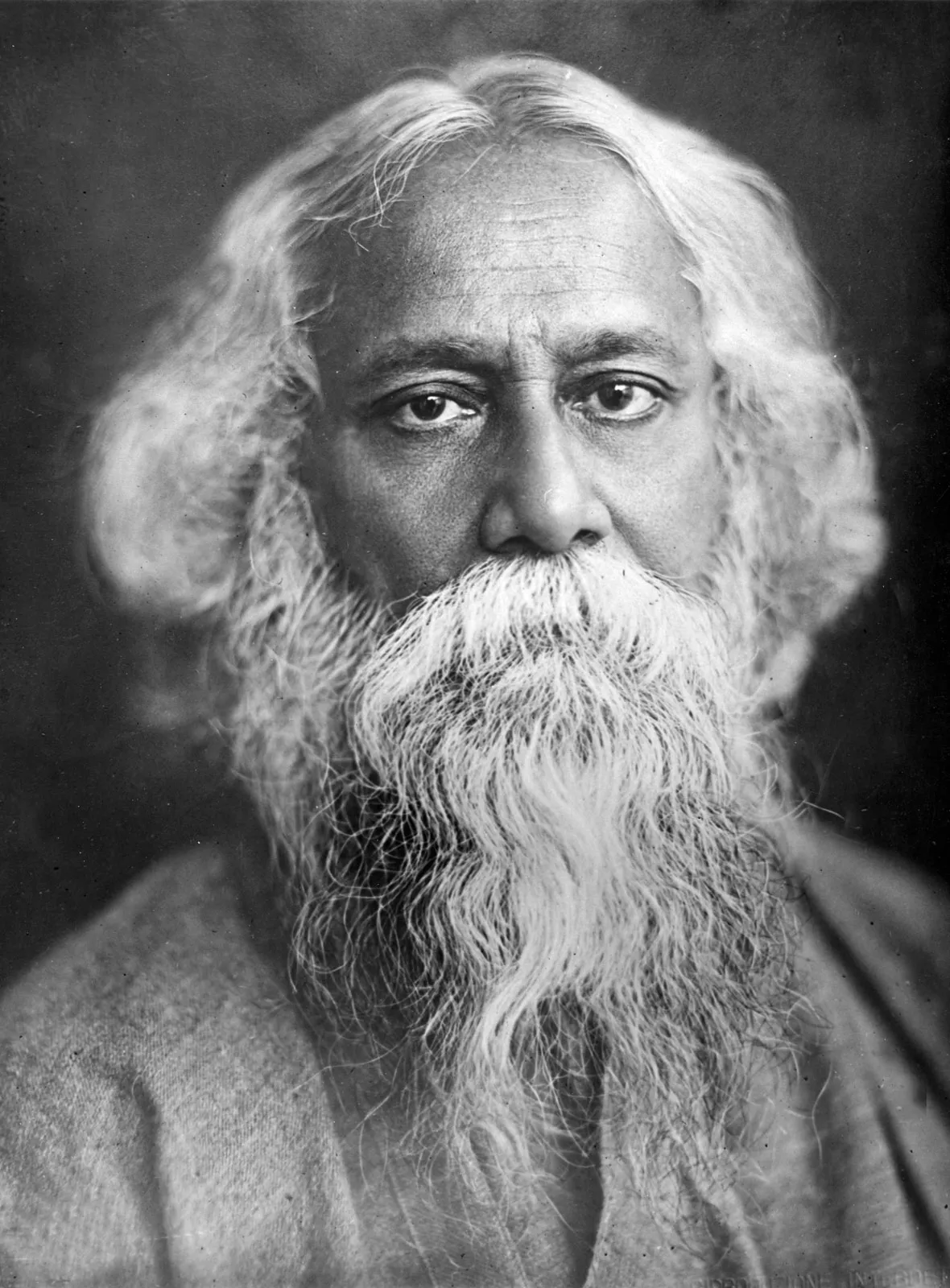
Kolkata, May 7, 2026 – On his birth anniversary, the world fondly remembers Rabindranath Tagore, the towering polymath whose genius transcended poetry, music, painting, and education. Even decades after his passing, the ‘Bard of Bengal’ remains an unmatched creative force, having reshaped the cultural identity of India and the world.
A Prodigy from Jorasanko
Born on May 7, 1861, in the Jorasanko mansion in Calcutta (now Kolkata), Tagore was raised in a prominent Bengali family. The youngest of 13 children, he was deeply influenced by his father, the religious reformer Debendranath Tagore. Loathe to adapt to formal schooling, his creativity was nurtured by private tutors at home where he was tutored on a variety of subjects by his elder brother Hemendranath. A rebellious child, he wrote his first poem at age eight and published his first collection at just 16 under the pen name ‘Bhanusimha’.
Revolutionizing Bengali Literature & Music
Tagore is widely recognized for freeing Bengali literature from its rigid, classical Sanskrit models by introducing colloquial language and innovative prose and verse forms. His time managing family estates in East Bengal (present-day Bangladesh) brought him in close contact with rural life, inspiring some of his most poignant short stories that examined the humble lives and their small miseries. His legendary songwriting produced over 2,000 compositions, known as ‘Rabindra Sangeet’—a genre that continues to hold a mirror to the human spirit. Beyond his native Bengal, his influence is eternalized in the national anthems of both India (‘Jana Gana Mana’) and Bangladesh (‘Amar Sonar Bangla’).
The Nobel Prize and Global Recognition
Tagore became the first non-European to win the Nobel Prize in Literature in 1913 for his profoundly sensitive collection, ‘Gitanjali’ (Song Offerings). While celebrated globally, Tagore was a proud patriot who renounced the knighthood awarded by the British King George V in 1915, in protest against the Jallianwala Bagh massacre of 1919. His travels took him to over 30 countries, where he engaged in intellectual discourse with the likes of Albert Einstein.
A Legacy Beyond Words
In his later years, Tagore turned to painting, creating more than 2,000 works of art. In 1921, he founded Visva-Bharati University at Santiniketan, an open-air institution dedicated to uniting Eastern and Western philosophies, breaking the shackles of conventional classroom curriculum. Revered as Gurudev and Biswakabi (the Poet of the World), his masterpieces such as Gora, Ghare-Baire (The Home and the World), and Shesher Kobita continue to spark introspection and awe.
Rabindranath Tagore passed away on August 7, 1941, in his ancestral home in Calcutta.
He once wrote, “Where the mind is without fear and the head is held high…” As we honor his memory today, his vision of a free, creative, and fully awakened humanity remains a timeless beacon.
_______________________________________________________________________________________________
For Event Promotion, Booking & Media Coverage:
India: +91 9382993780
USA: +1 (424) 266-2974
Email: californiatvglobal@gmail.com