
Instrument of the Day: Surbahar – The Deep-Voiced Bass Sitar of Hindustani Classical Music
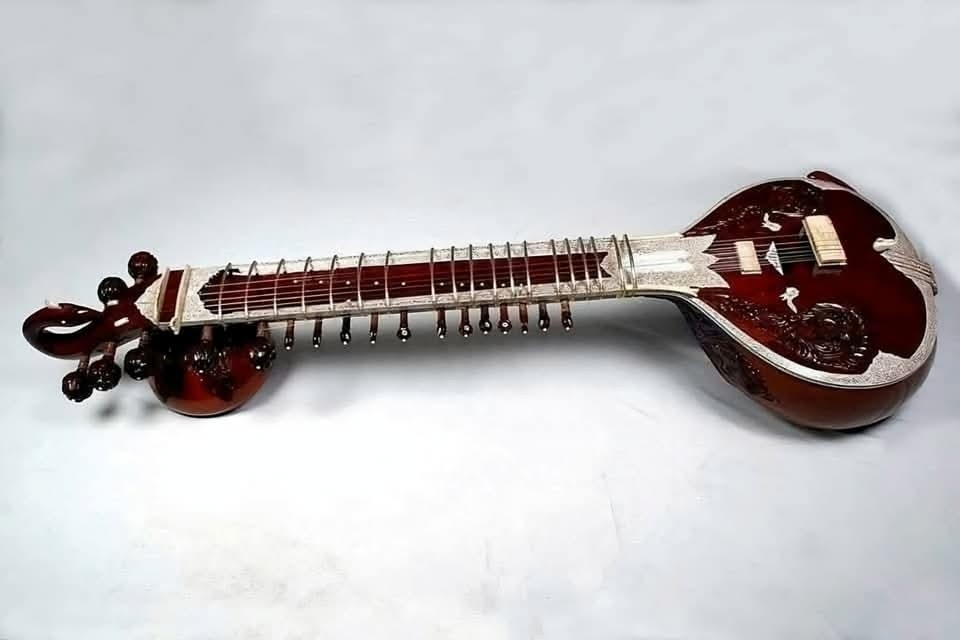
May 14, 2026 – Hindustani Classical Music And Everything (HCMAE) continues its daily instrumental series by turning the spotlight on the Surbahar (सुरबहार), a rare and resonant plucked string instrument often called the “bass sitar.” Known for its profound, meditative tone, the Surbahar occupies a special place in North Indian classical music.
What Makes the Surbahar Unique?
The Surbahar is closely related to the sitar but is pitched two to five whole steps lower, producing a rich, gravity-filled sound ideal for slow, elaborate raga expositions. Its name literally means “spring of melodies.”
Key Features
- Length: Over 130 cm (51 inches)
- Resonator: Dried gourd
- Neck: Wide frets made of toona or teak wood, allowing glissando of up to six notes on a single fret
- Strings: 3–4 rhythm strings (chikari), 4 playing strings, and 10–11 sympathetic strings
- Bridges: Two – the main bridge produces the signature jawari (buzzing) effect
- Plectrum: Metallic mizrab worn on the index finger; three plectrums are used for dhrupad-style playing
A Different Repertoire
Unlike the sitar, which is associated with khayal-style gats, the Surbahar is traditionally played in the dhrupad ang – featuring slow alap, jor, and jhala, often accompanied by pakhawaj instead of tabla.
Origins
Believed to have been invented around 1825. While often attributed to Ustad Sahebdad Khan, recent research credits Lucknow-based sitarist Ustad Ghulam Mohammed. Others mention Omrao Khan Beenkar as the pioneer.
Legendary Exponents
The Surbahar has been graced by maestros including:
- Ustad Imdad Khan, Ustad Enayet Khan, Ustad Vilayat Khan, Ustad Imrat Khan
- Vidushi Annapurna Devi, Ustad Irshad Khan
- Pandit Budhaditya Mukherjee, Kushal Das, Rajeev Janardan, Suvir Misra, Manilal Nag, Pt. Pushpraj Koshti, and others.
Legacy
Though less common today, the Surbahar is experiencing a quiet revival among connoisseurs who cherish its deep, introspective voice.
“The Surbahar is not just an instrument; it is a journey into the soul of a raga,” notes HCMAE.